Live Feed:New episodes, highlights, and rapid recaps
Episodes
•8:30 •S1E6

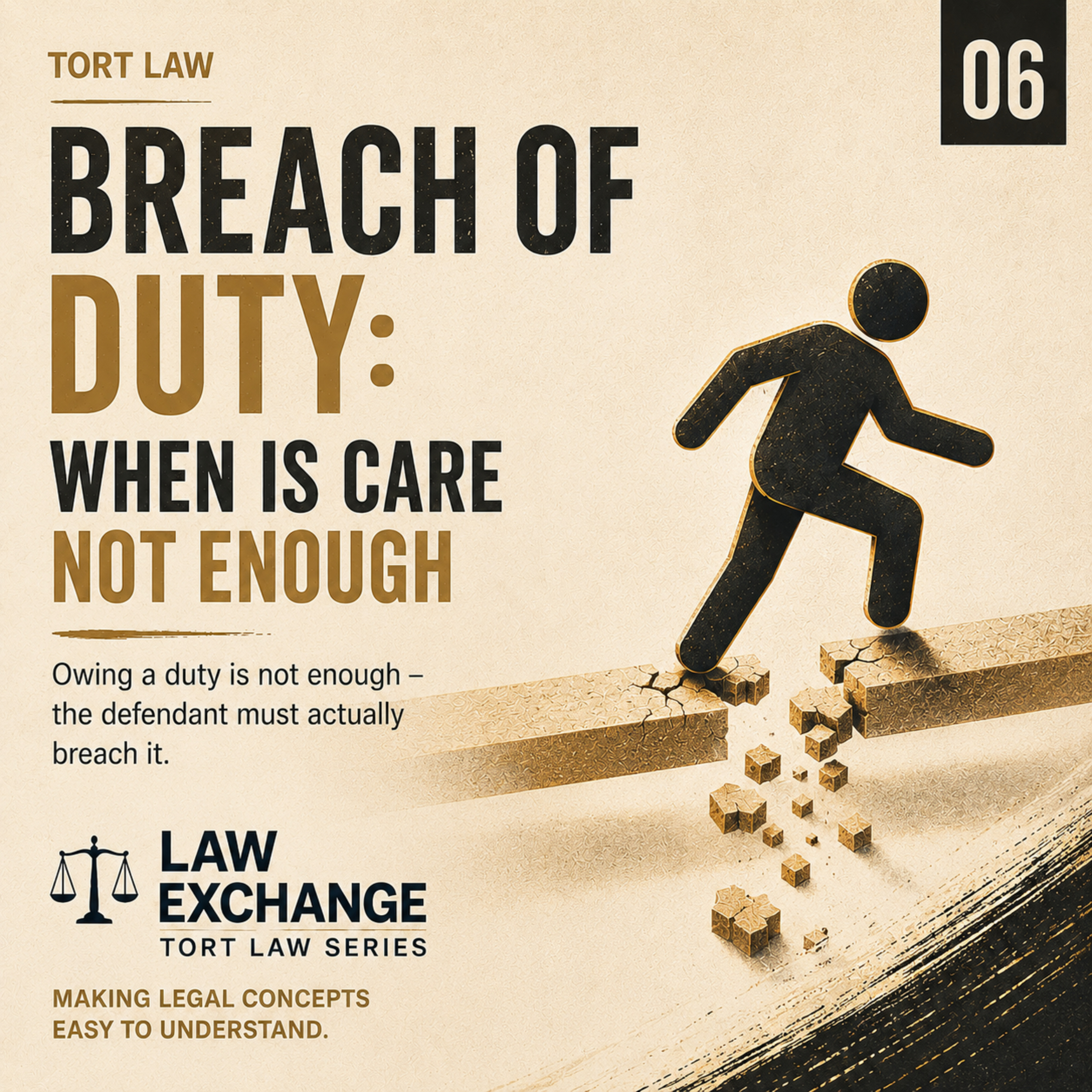
Tort Law 06 - Breach of Duty: When Care Isn't Enough.

In this episode

What is breach of duty in English negligence law?

Learn what a breach of duty means and how courts decide whether a defendant has failed to meet the required standard of care.

Understand the reasonable person test and how it is used to determine whether conduct falls below the standard expected by law.

Explore how courts consider the likelihood and seriousness of harm, the practicality of taking precautions, and the circumstances surrounding the risk.

Discover how breach of duty works as one of the key elements of a negligence claim.

Examine important cases including Blyth v Birmingham Waterworks, Paris v Stepney Borough Council, and Nettleship v Weston.

Understand why owing a duty of care does not automatically make someone legally responsible for an injury.

Clear explanations with practical, real-world examples.

Perfect for GCSE Law, A-Level Law, and LLB students.

Or anyone studying or interested in English tort law and negligence.

Build a strong foundation before exploring causation and damage in negligence claims.

Law Exchange, making legal concepts easy to understand.
Key Takeaways

  • Breach of duty in English negligence law occurs when a defendant fails to meet the required standard of care, which is determined using the reasonable person test.
  • Courts assess breach of duty by considering the likelihood and seriousness of harm, the practicality of taking precautions, and the circumstances surrounding the risk.
  • Owing a duty of care does not automatically make someone legally responsible for an injury; breach of duty is a separate element that must be established in a negligence claim.
  • Key cases including Blyth v Birmingham Waterworks, Paris v Stepney Borough Council, and Nettleship v Weston illustrate how courts determine whether conduct breaches the standard of care.

Frequently Asked Questions

What is the reasonable person test?

The reasonable person test is used by courts to determine whether a defendant's conduct falls below the standard of care expected by law.

What factors do courts consider when assessing breach of duty?

Courts consider the likelihood and seriousness of harm, the practicality of taking precautions, and the circumstances surrounding the risk.

Is owing a duty of care the same as being legally responsible for an injury?

No; owing a duty of care does not automatically make someone legally responsible. Breach of duty is a separate element that must be established in a negligence claim.

What are the key cases discussed in this episode?

The episode examines Blyth v Birmingham Waterworks, Paris v Stepney Borough Council, and Nettleship v Weston.