Live Feed:New episodes, highlights, and rapid recaps
Episodes
•9:38 •S1E7

Tort Law 07 - Causation: Did You Actually Cause the Harm?

Game plan

What is causation in English negligence law?

Learn how courts determine whether a defendant's breach of duty actually caused the claimant's harm.

Understand the “but for” test and how factual causation establishes the connection between negligent conduct and injury.

Explore legal causation, intervening acts, and how the chain of causation can be affected by events occurring after the defendant's negligence.

Discover the principle of remoteness and why the type of harm must be sufficiently connected to the defendant's conduct.

Examine how reasonable foreseeability helps courts decide whether damage is too remote to be legally recoverable.

Explore important principles from cases including The Wagon Mound and understand how the courts approach causation in negligence claims.

Clear explanations with practical, real-world examples.

Perfect for GCSE Law, A-Level Law, and LLB students.

Or anyone studying or interested in English tort law and negligence.

Build a strong foundation before exploring what legally recognised damage means in a negligence claim.

Law Exchange, making legal concepts easy to understand.
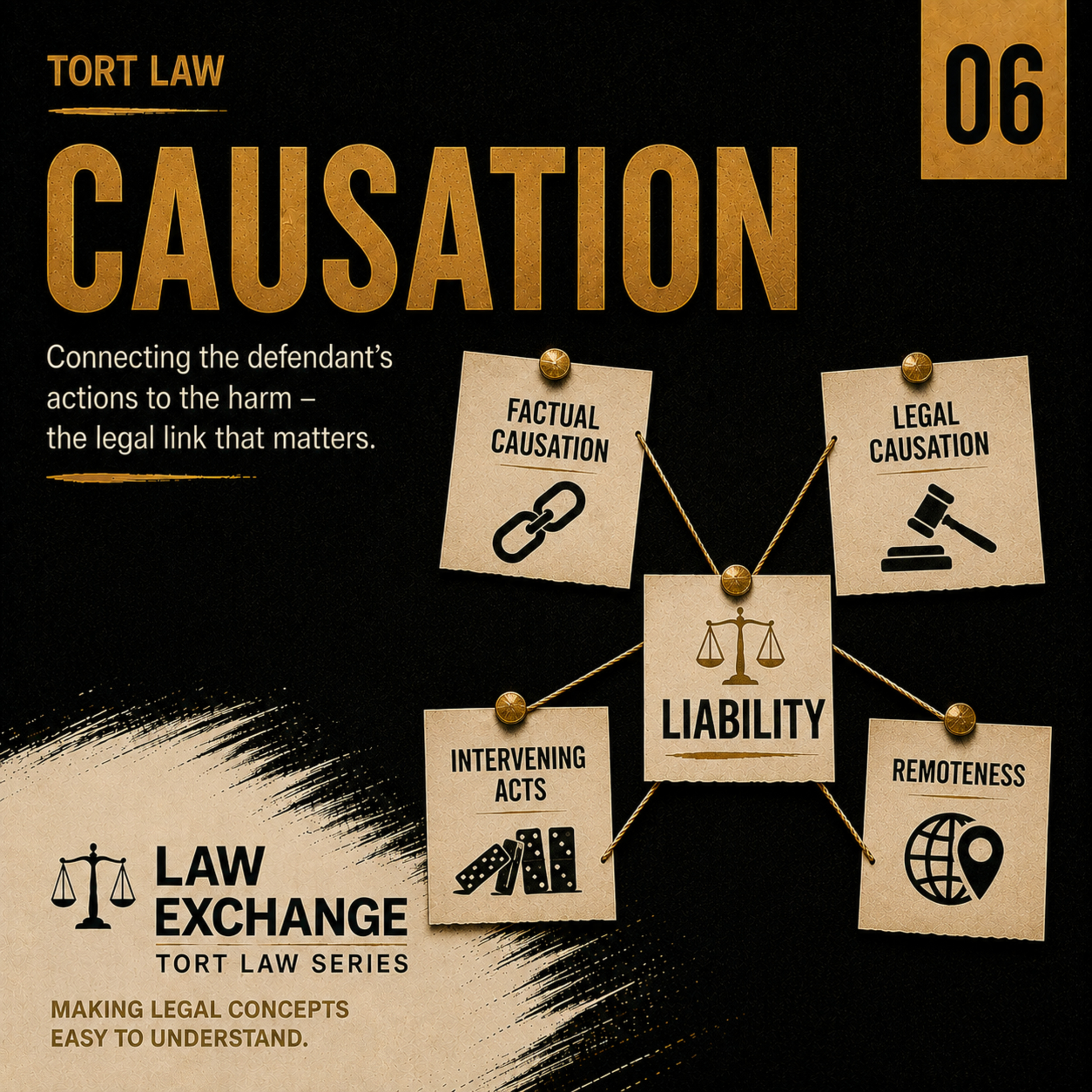
Key Takeaways

  • Causation in English negligence law requires establishing both factual causation (using the 'but for' test) and legal causation to prove the defendant's breach actually caused the claimant's harm.
  • The 'but for' test determines whether the harm would not have occurred without the defendant's negligent conduct.
  • Legal causation considers intervening acts and the remoteness of damage, requiring that the type of harm be sufficiently foreseeable and connected to the defendant's conduct.
  • The principle of reasonable foreseeability, established in cases like The Wagon Mound, helps courts decide whether damage is too remote to be legally recoverable.

Frequently Asked Questions

What is the 'but for' test in causation?

The 'but for' test establishes factual causation by determining whether the harm would not have occurred without the defendant's negligent conduct.

What is the difference between factual and legal causation?

Factual causation uses the 'but for' test to establish the connection between negligent conduct and injury, while legal causation considers intervening acts, remoteness, and whether the harm type is sufficiently foreseeable.

How do intervening acts affect the chain of causation?

Intervening acts occurring after the defendant's negligence can affect or break the chain of causation in a negligence claim.

What role does reasonable foreseeability play in causation?

Reasonable foreseeability helps courts decide whether damage is too remote to be legally recoverable and whether the type of harm is sufficiently connected to the defendant's conduct.

What is the principle of remoteness in negligence law?

Remoteness is the principle that the type of harm must be sufficiently connected to the defendant's conduct for damage to be legally recoverable.