Live Feed:New episodes, highlights, and rapid recaps
Episodes
•10:39 •S1E9

Tort Law 09 — Defences: Can a Defendant Avoid Liability?

Game plan

What are the main defences to a negligence claim in English law?

Learn how a defendant may avoid liability or reduce the amount of compensation payable even after the claimant has established the basic elements of negligence.

Understand contributory negligence and how the claimant's own lack of reasonable care can affect the damages they recover.

Explore voluntary assumption of risk, or volenti non fit injuria, and understand when knowingly and freely accepting a risk may provide a defence.

Discover mitigation of loss and why claimants are expected to take reasonable steps to limit the losses caused by an accident.

Understand how the law approaches situations where a claimant's own unlawful conduct may affect their ability to recover damages.

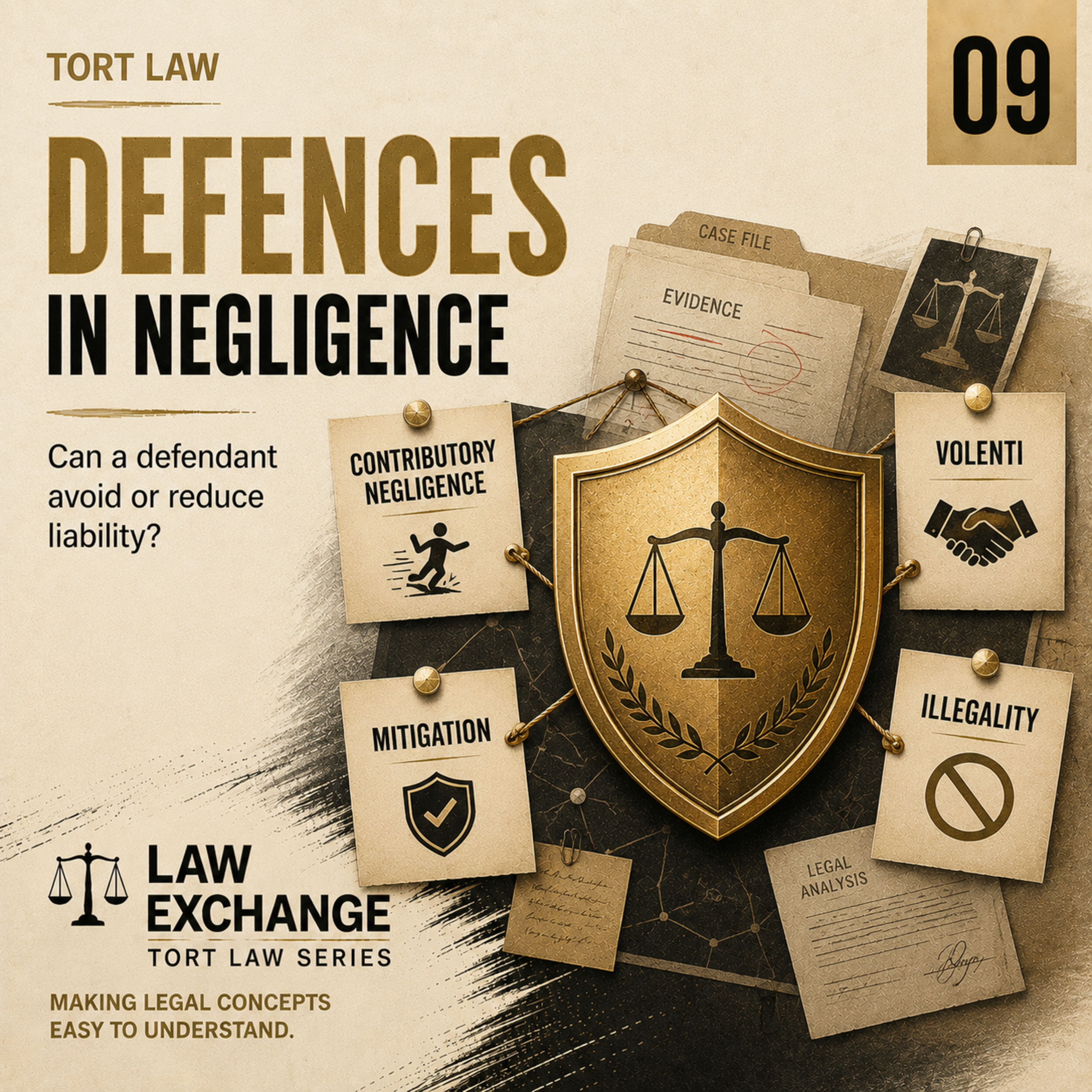
Explore the important principles behind defences including contributory negligence, volenti non fit injuria, mitigation, and illegality.

Clear explanations with practical, real-world examples.

Perfect for GCSE Law, A-Level Law, and LLB students.

Or anyone studying or interested in English tort law and negligence.

Understand how defences help the law determine who should be legally responsible, and to what extent.

Law Exchange, making legal concepts easy to understand.
Key Takeaways

  • English law recognizes several defences to negligence claims that can help defendants avoid liability or reduce compensation, including contributory negligence, volenti non fit injuria, mitigation of loss, and illegality.
  • Contributory negligence allows a defendant to reduce damages if the claimant's own lack of reasonable care contributed to their losses.
  • Volenti non fit injuria (voluntary assumption of risk) may provide a defence when a claimant knowingly and freely accepts a risk.
  • Claimants are legally expected to take reasonable steps to mitigate their losses following an accident, and failure to do so can affect the damages they recover.
  • A claimant's own unlawful conduct may affect their ability to recover damages in a negligence claim.

Frequently Asked Questions

What are the main defences to negligence in English law?

The main defences are contributory negligence, volenti non fit injuria (voluntary assumption of risk), mitigation of loss, and illegality.

How does contributory negligence affect a claimant's damages?

If the claimant's own lack of reasonable care contributed to their losses, the defendant can reduce the amount of compensation payable.

What is volenti non fit injuria?

It is a defence based on the claimant knowingly and freely accepting a risk, which may provide a defence to a negligence claim.

What is mitigation of loss?

Claimants are expected to take reasonable steps to limit the losses caused by an accident; failure to do so can affect the damages they recover.

Can a claimant's unlawful conduct prevent them from recovering damages?

Yes, a claimant's own unlawful conduct may affect their ability to recover damages in a negligence claim.