Live Feed:New episodes, highlights, and rapid recaps
Episodes
•9:06 •S2E1

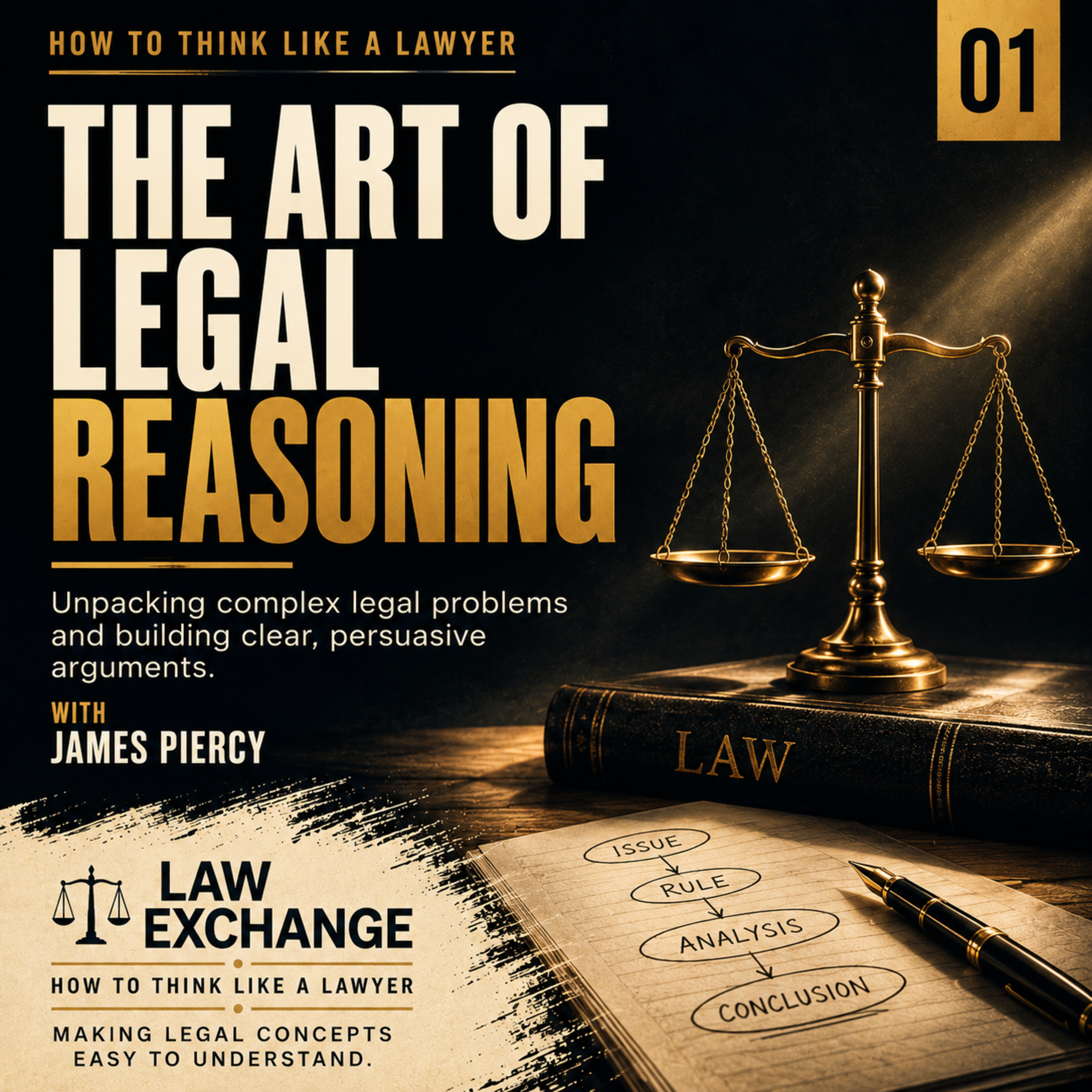
The Art of Legal Reasoning with James Piercy | How to Think Like a Lawyer

Game plan

In the first episode of How to Think Like a Lawyer, Alexander is joined by James Piercy for a conversation about what it really means to think, reason and argue like a lawyer.

James Piercy is a legal professional and advocate with experience in debating, mooting and appearing before judges. In this episode, he shares insights drawn from his experience studying and practising law, exploring how lawyers develop the ability to analyse complex problems, construct persuasive arguments and communicate with clarity.

What makes someone a good lawyer? Is it knowing the law, being a persuasive speaker, or something deeper? James Piercy explores how legal reasoning, clarity of thought and advocacy shape the way lawyers approach difficult legal problems.

James discusses his experience of mooting and debating, the difference between knowing the law and being able to argue it, and why the strongest legal arguments are often the clearest and simplest. He explains how to structure complex legal issues using checklists, flow charts and clear steps, as well as how signposting can make an argument significantly more persuasive.

The interview also explores advocacy before judges, including how to respond when a judge challenges your argument, why judicial intervention should not be treated as an attack, and how the role of an advocate changes from performance and confrontation to conversation and assistance.

James also reflects on choosing areas of law to explore, finding subjects that genuinely capture your imagination, and what he wishes he had known before starting university.

Topics covered include: legal reasoning, legal analysis, advocacy, mooting, debating, legal argument, persuasive advocacy, judicial intervention, legal education and thinking like a lawyer.

How to Think Like a Lawyer — Episode 01: The Art of Legal Reasoning with James Pierce.

Featured Guests

Key Takeaways

  • Good lawyers need more than legal knowledge: Legal reasoning involves taking complex legal problems, analysing them clearly, and turning that analysis into a persuasive argument.
  • Clarity is at the heart of legal advocacy: The strongest legal arguments are often the simplest. Using plain language, clear steps, lists, flow charts and effective signposting can make difficult legal issues easier to understand.
  • Knowing the law is different from arguing the law: James explains how mooting taught him that knowing legal rules is only part of advocacy. Lawyers must also anticipate questions, analyse their case further and respond when their arguments are challenged.
  • Judicial intervention is part of advocacy: When a judge challenges an argument, advocates should remain calm and treat the intervention as part of a shared process of reaching the correct outcome, rather than as a personal attack.
  • Advocacy is a conversation, not a performance: James reflects on how his understanding of advocacy changed from seeing it as a battle or performance to seeing it as an act of assistance and collaboration with the judge and the other side.

Frequently Asked Questions

Who is James Piercy?

James Piercy is a legal professional and advocate with experience in debating, mooting and appearing before judges. In this Law Exchange episode, he discusses legal reasoning, advocacy and how to think like a lawyer.

What makes someone a good lawyer?

According to James, being a good lawyer is about more than knowing the law or being a persuasive speaker. It involves clear thinking, clear communication and the ability to turn complex legal problems into simple, persuasive arguments.

How should lawyers respond when a judge challenges their argument?

Knowing the law means understanding the relevant legal rules and principles. Arguing the law requires taking that knowledge further by analysing the problem, anticipating questions and constructing an argument that can withstand challenge.

How can students develop legal reasoning and advocacy skills?

James highlights debating and mooting as valuable ways to develop these skills. He also recommends using clear structures such as checklists and flow charts, communicating in simple language and using signposting to make arguments easier to follow.