The Limits of International Law with Amna Haider | How to Think Like a Lawyer
Game plan
Game plan
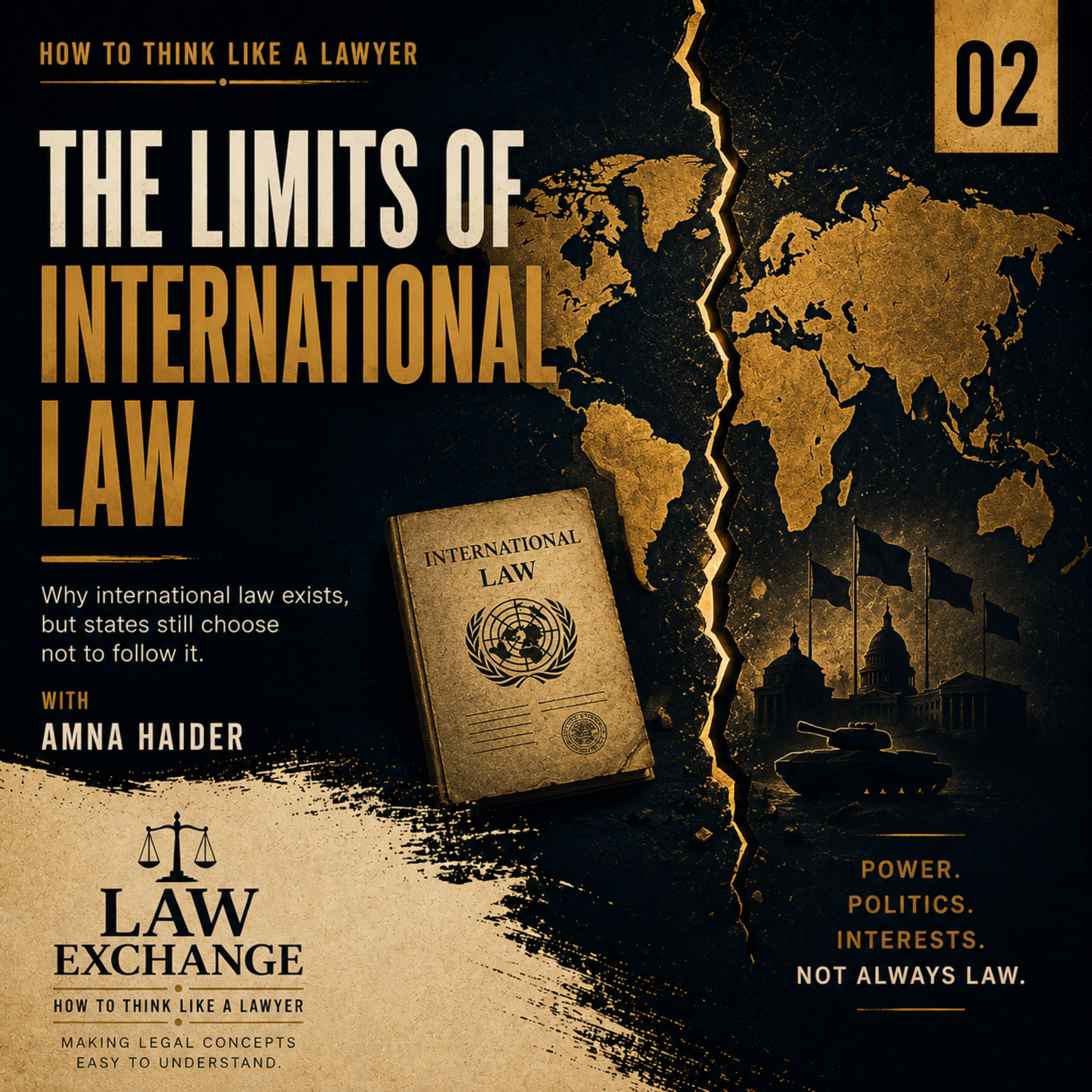
In the second episode of How to Think Like a Lawyer, Alexander is joined by Amna Haider, a human rights and international affairs expert, for a conversation about one of the biggest questions in international law: what happens when international law exists, but states choose not to follow it?
Amna brings her experience studying international law, human rights and international affairs to explore the limits of the international legal system and the difficult relationship between legal rules, state practice, political power and international relations.
The interview begins with the 2003 Iraq War, examining the controversial legal arguments surrounding the use of force, UN Security Council authorisation and the question of whether international law was followed. Amna explains why international law cannot simply be understood as a system that automatically stops states from acting, and explores the importance of political will, state power and the international community.
Amna and Alexander then explore the relationship between international law and state practice, including how customary international law develops and why what states actually do can influence the evolution of legal norms. They also discuss opinio juris and the need for widespread and representative acceptance of a practice.
The episode also examines international human rights law and humanitarian intervention, asking when a crisis inside one country becomes an international human rights concern and where the line should be drawn between protecting human rights and respecting state sovereignty. Amna discusses examples including Darfur, Kosovo and Libya, while considering how international interests and the visibility of a crisis can influence international action.
The interview then moves beyond the battlefield to post-conflict international law. Amna discusses her research into jus post bellum — justice after war — and the legal questions that emerge when a conflict ends, including sovereignty, resources and occupation, as well as the extent to which an occupier can change the structure of a country’s government.
She also explores post-conflict resource extraction, permanent sovereignty over natural resources and the tension between local ownership, international law and the liberal international order.
The conversation considers how states might be encouraged to respect local ownership of natural resources, including through international relations, strategy, diplomacy, research and collaboration between markets and local communities.
Finally, Amna considers a fundamental question for lawyers: what should a lawyer do when something appears morally wrong but international law does not clearly prohibit it? The discussion examines the role of lawyers as advocates and the difficult relationship between professional advocacy and personal morality.
Topics covered include: international law, human rights law, international affairs, the Iraq War, UN Security Council authorisation, state practice, customary international law, opinio juris, humanitarian intervention, sovereignty, the Responsibility to Protect, jus post bellum, post-conflict law, natural resources, international relations, legal advocacy and the limits of international law.
How to Think Like a Lawyer — Episode 02: The Limits of International Law with Amna Haider.

 Spotify
 Apple Podcasts
 YouTube
 Amazon Music
 Castbox