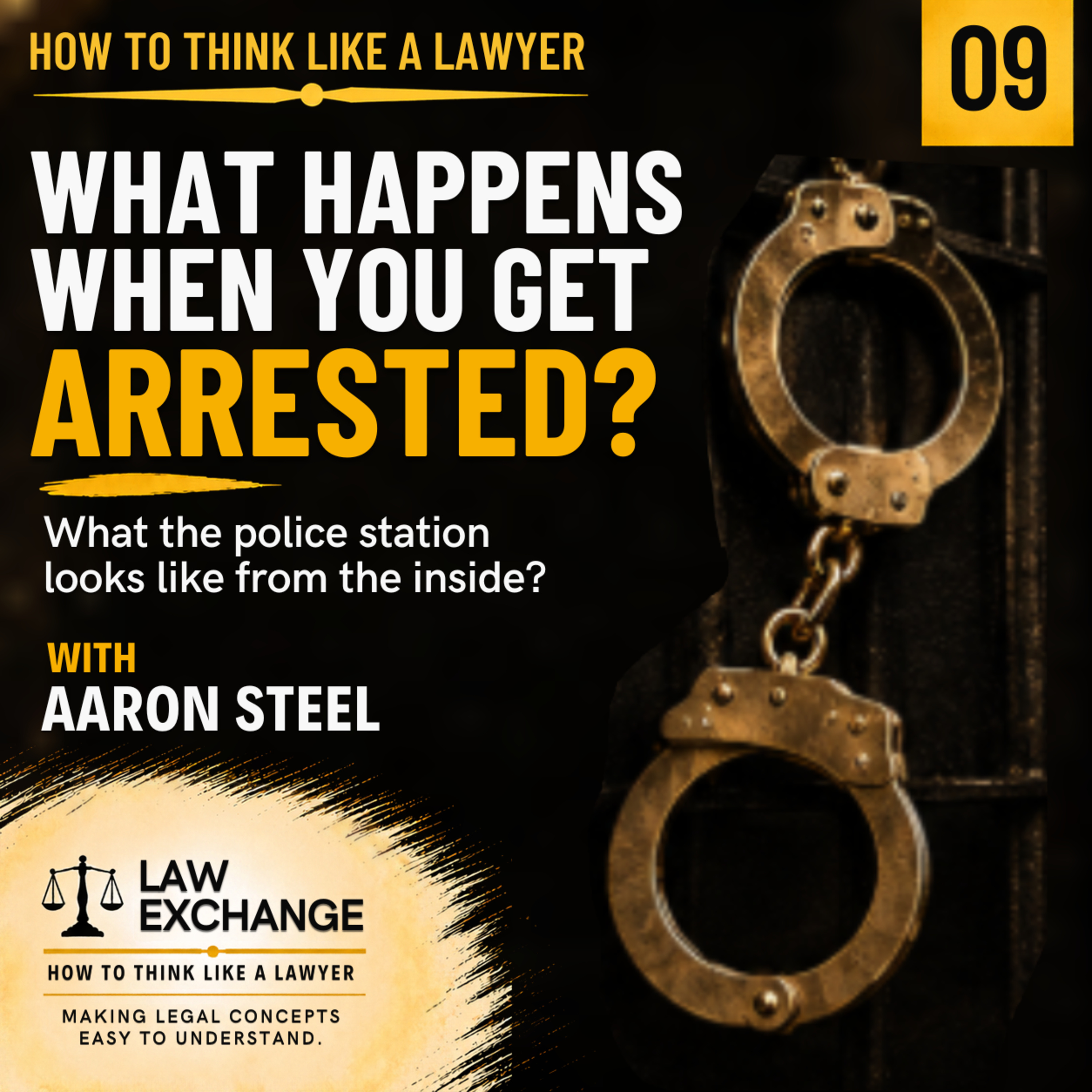
What Happens When You Get Arrested? with Aaron Steel | How to Think Like a Lawyer
In this episode
In the ninth episode of How to Think Like a Lawyer, Alexander is joined by Aaron Steel, an accredited police station representative, author, actor and barrister, for a look inside the police station: what really happens from the moment someone is arrested to the moment they are charged, bailed or released.
Aaron starts by explaining what a police station representative does, why you don’t need a law degree to become one, and how reps cover the call-out at one o’clock in the morning while making sure the police follow PACE. He busts two big myths: that reps without a law degree give worse advice, and that the duty solicitor works for the police.
The conversation then follows a case step by step. Aaron explains what happens when someone is arrested and read their rights, including the right to free and independent legal advice, how the call reaches a solicitor and then a rep, why clients are warned not to talk about their case in the cell or on the bridge, and the forty-five minute guideline once the police are ready to interview. Inside the station he describes what disclosure is, how he uses the custody record, and how he takes a client’s account before advising them.
At the centre of the episode is the interview under caution. Aaron explains the three parts of the caution, why what you say in interview can make or break a case, and how he helps clients choose between a full account, a prepared statement and no comment, using a breach of a restraining order as an example. He also covers phone PINs, identification procedures and forensic samples.
Alexander and Aaron then look at the ethics of the role: what a rep should do when a client privately admits an offence but denies it in interview, why the duty to the court comes first, and how sections 76 and 78 of PACE deal with confessions and unfair evidence. Aaron also explains how he builds trust with frightened clients, his working relationship with officers and custody staff, and what changes when a suspect is under eighteen or vulnerable.
Next, they look at what happens after the interview: no further action, police cautions, community resolutions, bail and release under investigation, and how long the police can hold someone and when they must let them go. Aaron also tackles the biggest misconception about arrest, that being arrested does not mean you are guilty, and explains why having a solicitor with you never makes you look guilty.
The interview also covers the bigger picture: why free legal advice matters whatever your income, what Aaron learned at Citizens Advice, and the backlog in the criminal justice system. He also names the one law he’d change tomorrow, and it has nothing to do with the police station and everything to do with football.
Finally, Aaron talks about his route into the law: shadowing a solicitor for free, qualifying as a rep, saving for the Bar course, and being called to the Bar as an unregistered barrister while he looks for pupillage. He explains how acting shapes the way he advocates, what makes a good police station rep, how he copes with the tough days, and his advice to his younger self: don’t stress so much.
Topics covered include: police station representatives, arrest, police custody, the right to legal advice, the duty solicitor, PACE, the police caution, interview under caution, the right to silence, no comment interviews, prepared statements, disclosure, the custody record, appropriate adults, vulnerable suspects, confessions, unfair evidence, bail, release under investigation, out-of-court disposals, community resolutions, detention time limits, the criminal justice backlog, legal aid, access to justice, advocacy, acting and advocacy, becoming a barrister, pupillage and careers in criminal law.
How to Think Like a Lawyer — Episode 09: What Happens When You Get Arrested? with Aaron Steel.



 Spotify
 Apple Podcasts
 YouTube
 Amazon Music
 Castbox